How to Induct Contractors Who Work Across Multiple Rail Freight Depots
Category
Views
Published Date

Chris Chart
Founder
Summary
Contractors in rail freight carry sector knowledge but no site knowledge every time they move between depots. Here is why standard induction processes fail this group — and what a more effective approach looks like.
Share this article
A contractor arrives at a rail freight depot they have not worked at before. They have years of experience in the sector. They know the relevant safety standards, they have completed more inductions than they can count, and they hold the certifications that the work requires. By every measurable compliance standard, they are qualified to be there.
What they do not have is any sense of how this particular site is laid out. Where the pedestrian routes are. Which areas are shared with moving vehicles. Where the pinch points are around loading. How this depot differs from the last three they worked at.
That gap — between sector knowledge and site knowledge — is one of the more persistent challenges in rail freight safety, and it sits almost entirely in the space that standard induction processes were not designed to address.
The scale of contractor movement in rail freight
Contractors make up a significant part of the rail freight workforce. Maintenance teams, specialist engineers, ground staff and logistics contractors regularly move between operators and sites depending on where the work is. Some work with multiple operators simultaneously. Others move between depots within the same network, where the rules may be broadly consistent but the environments are entirely different.
This is not unique to rail. Mobile workforces are common across construction, utilities and logistics. But in rail freight, the hazard profile of each site tends to be complex enough that the gap between generic and site-specific knowledge matters more than it would in a simpler environment.
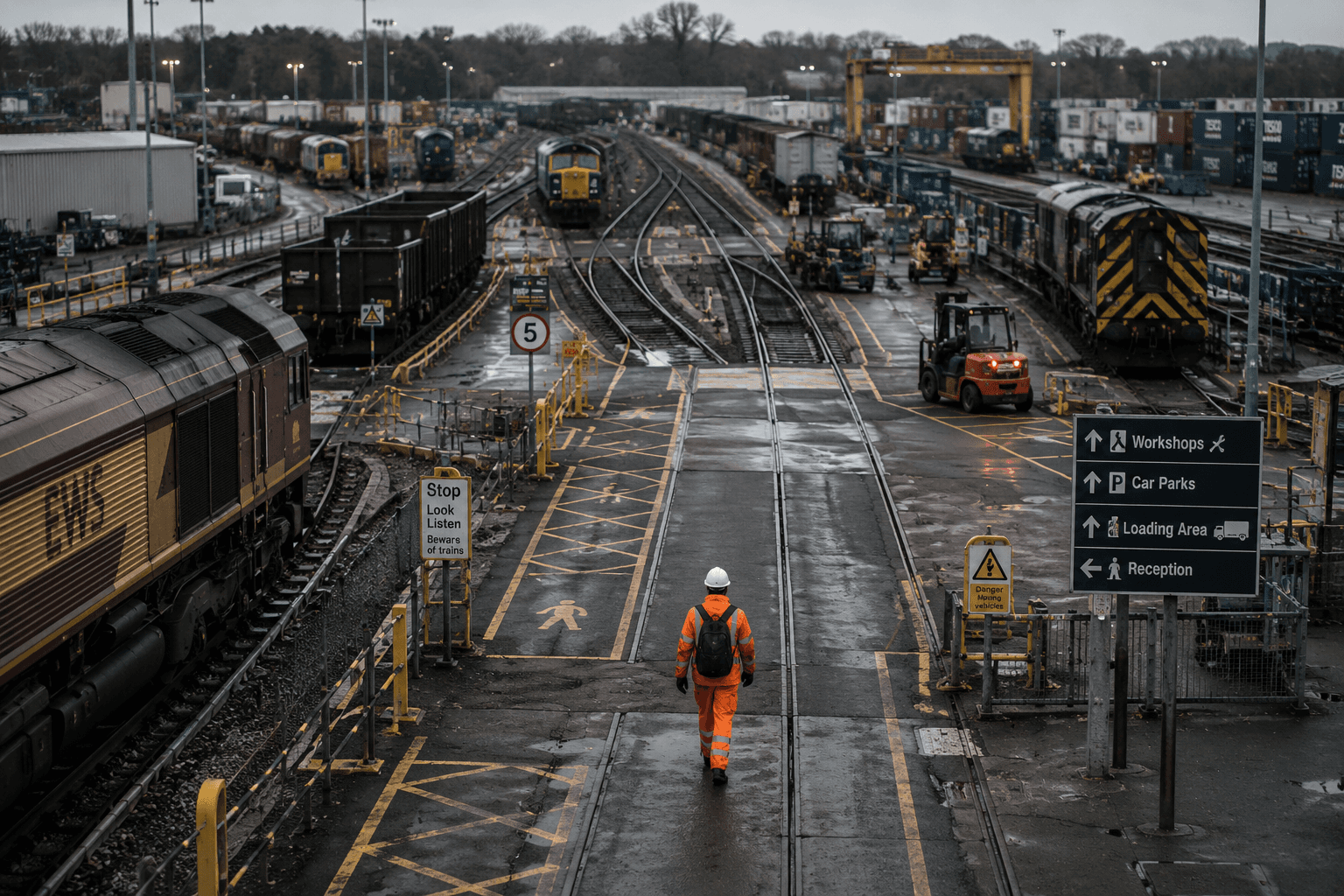
A rail freight depot is not a standardised space. The arrangement of tracks, access points, loading equipment and pedestrian areas varies considerably from one facility to the next. The specific risks associated with trackside work, vehicle movements and heavy plant are real and serious, and they manifest differently depending on the physical layout of each site.
When contractors move between depots, they carry their experience with them. What they do not carry is any spatial understanding of the new environment.
What standard induction was built to do — and where it falls short
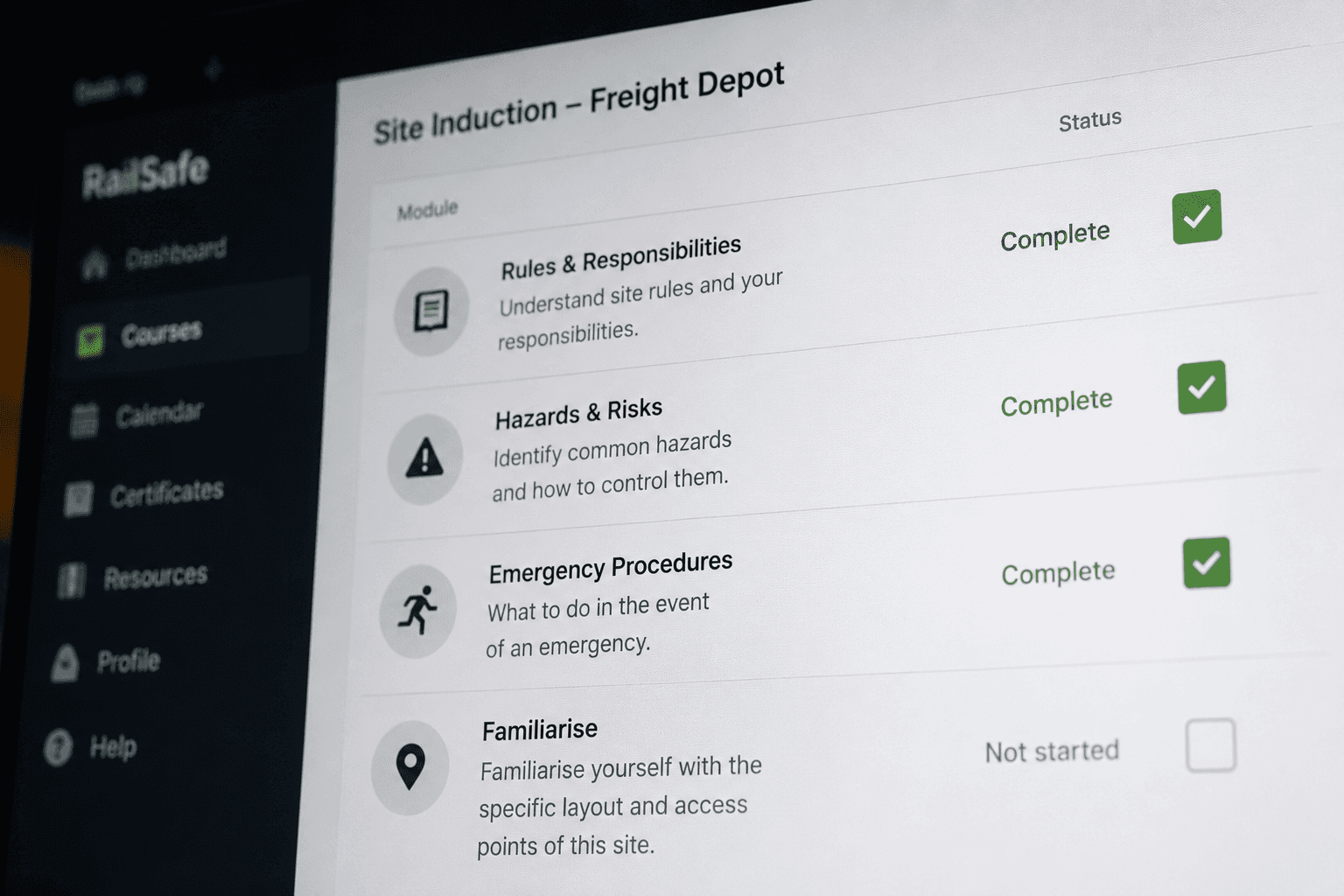
Online induction platforms have made it much easier to manage contractor compliance at scale. A contractor can complete a site induction before they arrive, the completion is recorded, and the operator has a time-stamped record that can be produced if needed. For managing volume, that is a significant improvement on paper-based processes.
But standard digital induction — module completion, policy acknowledgement, safety video — was built primarily to address the rule knowledge problem. It covers what contractors are required to know: the relevant regulations, the emergency procedures, the site rules that apply across that operator's network.
What it cannot do is give a contractor any meaningful understanding of the specific site they are walking into. A contractor who has completed an online induction for Depot A knows the rules. They do not know where anything is, how the space flows, or which parts of the depot require the most attention.
When they arrive, that gap has to be filled somehow. Often, it is filled by an experienced member of staff doing a physical walkthrough. Which takes time, takes that person away from their own work, and delivers a different level of information depending on who happens to be available.
The compliance tracking problem
Beyond the site knowledge gap, there is an administrative challenge that H&S Managers in multi-depot operations will recognise.
Tracking which contractor has been inducted for which site, when that induction expires, and whether the current version of the induction content was in use at the time is genuinely difficult to manage across a large contractor pool. Spreadsheets accumulate errors. Paper records get lost. Inductions lapse without anyone noticing until the contractor turns up for a shift.
The problem compounds when contractors work across more than one operator. Each operator typically runs its own induction process, often with no visibility into what the others have covered. A contractor might complete four separate inductions in a month, each covering broadly the same sector-level content, with no record shared between the organisations involved. The duplication is inefficient for the contractor, and each operator is still left without any assurance that the contractor understands their specific site.
For operators managing dozens or hundreds of contractors across a network of depots, maintaining clean, current compliance records is a significant overhead. When the records are spread across manual systems, the risk of a gap is high.
The consistency problem nobody tends to flag
There is another issue that sits alongside the compliance tracking challenge, and it gets less attention: the quality of what contractors are being inducted on is rarely consistent.
An operator with six depots may have induction content that covers the network broadly but does not reflect the specific conditions at each site. Two depots may share the same induction module even though one has a significantly more complex trackside access arrangement than the other. The contractor completes the induction for the network. They arrive at the more demanding site with no additional preparation.
Conversely, where sites have developed their own induction content independently, the quality and depth varies. Some sites give contractors a thorough briefing on local hazards and access arrangements. Others hand over a document and ask for a signature.
Neither approach is inherently wrong given the constraints operators are working within. But the result is that the level of preparation a contractor receives before stepping onto a site is largely a function of where they happen to be working, rather than a consistent baseline that the operator can rely on.
What site-specific induction for contractors actually needs to cover
Getting contractor induction right across a multi-depot network requires separating two things that tend to get bundled together.
The first is sector and network compliance. This is the content that applies everywhere: the relevant safety legislation, the operator's network-wide rules, emergency procedures and reporting requirements. This content can be standardised, delivered digitally, and tracked centrally. It is also the content that most current induction platforms handle well.
The second is site-specific environmental preparation. This is the content that applies to this depot, this arrangement of tracks and access points, these specific local hazards. It cannot be standardised across the network because the environments are different. And it cannot be adequately delivered through a written brief, because what a contractor needs is a spatial understanding of the site, not a list of facts about it.
These two things serve different purposes and need different approaches. Conflating them into a single induction module produces something that is neither fully compliant nor genuinely preparatory.
A more effective approach to multi-depot contractor induction
Operators who want to address this properly tend to arrive at a similar conclusion: the network-level content and the site-specific content need to be managed separately.
Network compliance induction — standardised, digitally delivered and centrally tracked — works well for the former. It can be issued before arrival, completed on any device, recorded automatically and refreshed when content changes. The compliance overhead comes down significantly when this part of the process is properly centralised.
Site-specific preparation is harder, and it is where most current solutions run out of road. A written brief does not give a contractor a mental model of the space. A video walkthrough gives them a fixed perspective that bears limited resemblance to moving through the site themselves. A physical walkthrough on day one is effective but expensive in staff time, inconsistent in delivery, and leaves nothing in the record.
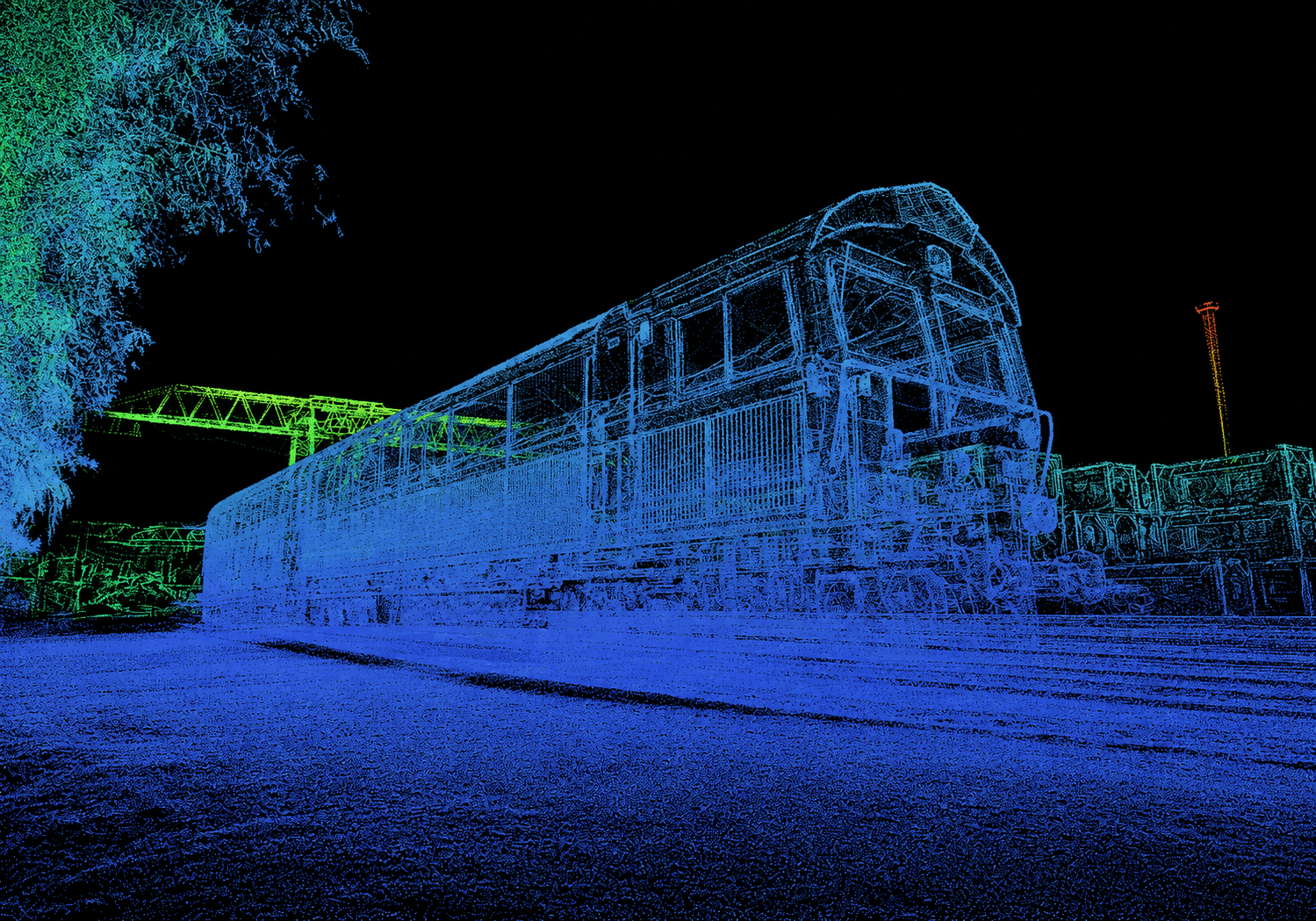
What changes the picture is the ability to give contractors access to a realistic, explorable representation of the specific site before they arrive. Not a generic template. Not a diagram. Something built from the actual environment, that lets a contractor orient themselves, understand the layout, and arrive with genuine spatial awareness rather than a blank.
When that is in place, the physical walkthrough on day one becomes a confirmation rather than an introduction. The contractor already knows where they are going. The experienced colleague still available to answer questions is not needed to explain the basics.
Getting the admin right
Site-specific preparation aside, there are practical steps that make multi-depot contractor induction significantly more manageable from a compliance perspective.
Centralising records is the most important of these. Where induction completions are tracked in a single system across all sites and all contractors, the visibility problems that come with spreadsheets and paper records largely disappear. Expiry dates can be monitored automatically. Supervisors can check compliance status before a contractor arrives rather than after they have already walked through the gate. Audits become a query rather than an investigation.
Version control is the other area that tends to be underestimated. When induction content is updated — because a site procedure changes, new equipment is introduced, or a regulatory requirement is revised — there needs to be a reliable way to confirm that all relevant contractors have been through the updated version. Without that, an audit trail that shows completion dates is only partially useful.
None of this is straightforward across a large, mobile workforce. But the operators who manage it well tend to have one thing in common: they treat contractor compliance as an ongoing operational process rather than a one-time administrative task.
The broader point
The challenge of inducting contractors across multiple rail freight depots is, at its core, a challenge of managing two different things that look similar on the surface.
Compliance records are important, and the tools to manage them centrally now exist and work well. But compliance records do not tell you whether a contractor actually understands the site they are working on. Those are different questions, and the answer to the second one requires something that most induction processes have not yet caught up with.
Getting both right is not straightforward. But the cost of getting only one right is visible every time an experienced contractor arrives at an unfamiliar depot and needs a guided tour before they can start work.
Showspace builds spatial familiarisation tools for rail freight and safety-critical operations. If you manage contractor induction across multiple sites and want to see what site-specific environmental preparation can look like, we would be glad to show you.
[Get in touch with Showspace]